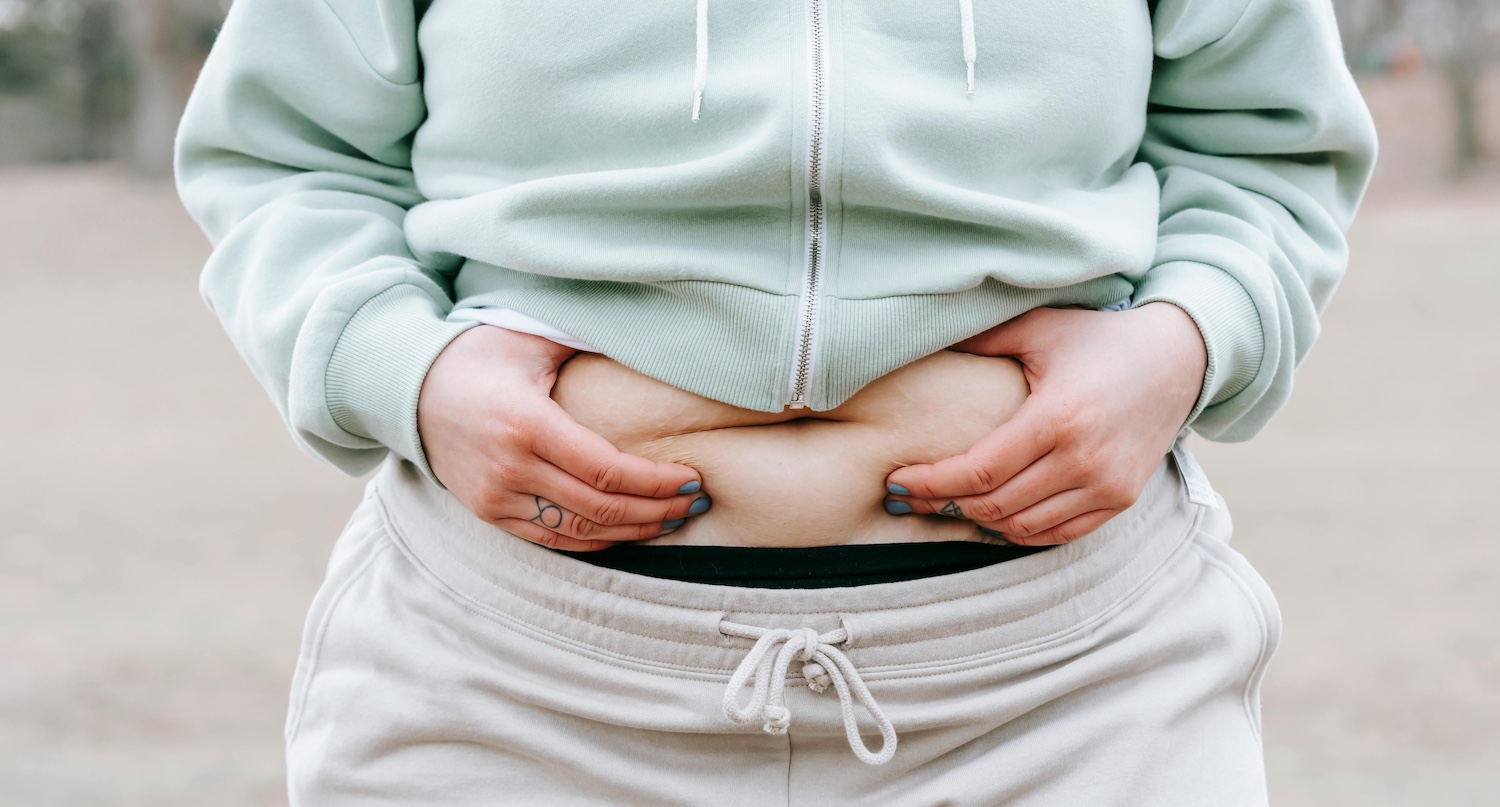
Menopause belly fat, often called “meno-belly” is a common experience for women as they transition through menopause. Due to a combination of hormonal changes, aging, and lifestyle factors, Hormonal fluctuations contribute to fat redistribution, and your ability to burn fat. Aging leads to a decrease in muscle mass and an increase in fat storage, particularly around the abdomen. If you are a 40+ female you need to read this article.
Know Your Meno-Belly Fat
- Meno-Belly fat is a combination of visceral and subcutaneous fat.
Subcutaneous fat
- Is fat that’s stored just beneath the skin
- You can pinch it and squeeze it between your fingers, because its stored in connective tissue pockets, which are typically visible in females and referred to as cellulite
- It’s the doughnut around your belly button
- Not pretty BUT not dangerous
Visceral fat is different
- It’s stored behind your abdominal muscles
- Not visible unless the ‘bulge’ that starts just under your ribcage gets big enough
- Visceral fat surrounds the stomach, liver, intestines and other organs, can even line your blood vessels.
- Can be estimated by your waist circumference
- It’s considered dangerous and increases the risk for
– Diabetes
– Hypertension
– Metabolic syndrome
– Cardiovascular diseases (the leading cause of death among postmenopausal women)
– And so much more
Is Meno-Belly dangerous?
- YES, it can be
- Because of its contents of visceral fat which is sometimes referred to as “active fat”
- Studies support the notion that visceral fat is an endocrine organ involved in the complex interrelationship between obesity and systemic inflammation.
- It releases proteins and hormones that increase inflammation, such as IL-6, TNF-α, and the hormone Resistin, which are produced by fat and immune cells, and connected with Type 2 Diabetes
- The excess inflammation can damage your arteries, enter your liver and negatively affect how your body breaks down sugars and fats
How much visceral fat is normal?
- 10% of your total body fat.
- If your total body fat percentage is higher than recommended, then your visceral fat range will be too.
Is visceral fat harder to lose?
- Visceral fat is actually easier to lose because it metabolizes quicker
What does a Meno-belly look like?
Fat around the belly button
- The doughnut
- You can squeeze it so its subcutaneous
Fat bulging from just under the ribcage
- The apple
- You can’t squeeze it so its visceral
- You can measure it through your waist circumference
Know your waist circumference
Waist circumference is a measure of abdominal fat, mostly the visceral fat element and as such a useful indicator of overall health risks.
- Healthy – Under 80 cm / 31.5 inches – low risk for associated diseases
- Moderately unhealthy – 80- 88 cm / 31.5 – 34.6 inches – moderate risk for associated diseases
- Severely unhealthy – Over 88 cm / 34.6 inches – severe risk for associated diseases
How to measure
- Stand up with legs in line with your shoulders and breathe calmly.
- Place the tape measure horizontal precisely in between the bottom rib and the upper crest of the pelvis. You can find these points by pressing the skin in towards the bones.
- Do not use your belly button as a landmark
- The belly button is the centre of the doughnut your waist is above
- Measure your waist circumference with the tape measure after expiring in a relaxed fashion.
Possible Causes of Meno-Belly Fat
The cause of meno-belly is multifactorial and for long-term results all the below should be evaluated and treated where appropriate
- Fluctuating and declining hormone levels
- Loss in muscle mass
- Decreased activity level
- Genetics
- Increased caloric intake
Meno-Belly and Disease
Science shows quite clearly that there are several disease states that are strongly linked to Meno-belly
- Heart disease
- Alzheimer’s
- Cancer
- Type 2 diabetes
- Stroke
- High cholesterol
- High blood pressure
- Osteoporosis
Meno-belly and heart disease
- One study found that women with the biggest waists relative to their hip size were twice as likely to get heart disease.
- Healthy women who didn’t smoke had a 10% increase in heart disease risk as their waist size went up by 2 inches.
Meno-belly and Alzheimer’s disease
- Another study found that people with more belly fat and visceral fat had three times the risk for Dementia compared to people with the least belly fat.
Meno-belly and cancer
- One study found that women with the most belly fat were three times as likely to get precancerous polyps in their colons.
Meno-belly and Type 2 diabetes
- The more belly fat the bigger the risk for insulin resistance and Type 2 diabetes.
Meno-belly and stroke
- The causes aren’t clear, but studies show more belly fat more risk of having a stroke.
Meno-belly and high cholesterol
Meno-belly and high blood pressure
- Belly fat has also been linked to high blood pressure (hypertension).
Meno-Belly and bone health
- Women with more belly fat (even before menopause) had lower bone density, a warning sign of osteoporosis.
See Part 2 of this article for strategies to reduce meno-belly.